
Be’er Sheva River Park, Israel
Written by Berliner Seilfabrik Team
Be’er-Sheva in southern Israel is one of the country’s largest cities. It is considered by many to be the “Capital of the Negev,” which it borders on. As a so-called “developing city,” Be’er-Sheva has been turning into a religious center and has also become an important Israeli metropolis over recent decades.
In order to maintain the city’s attractiveness for its 200,000 inhabitants, it is crucial to create attractive facilities for young families. In addition to emerging residential neighborhoods, the growing industrial sector and increasing tourism, new local parks have been established in the last few years. One of these is Be’er-Sheva River Park. Covering an expanse of several square miles, the large River Park follows the course of Nahal Be’er-Sheva, a large riverbed that does not carry any water during the dry season.

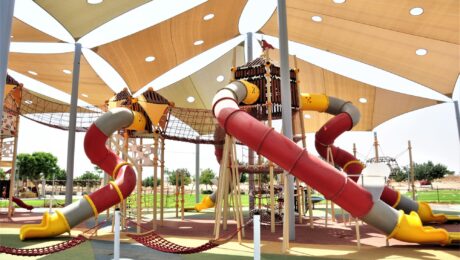
As of June 2017, the park boasts a new centerpiece: a massive playground consisting of a vast climbing landscape made up of equipment provided by Berliner Seilfabrik.
Seven differently equipped climbing towers are evenly distributed over an area of approx. 10,765-ft.² They serve as the foundation pillars of this climbing paradise. The towers are connected with net bridges that are up to 20 feet in length. Some of the bamboo-clad towers are more than 26 feet high, giving them the appearance of a tree house village thanks to their natural design.
Besides its remarkable size and complexity, another special feature of the playground is its density of climbing structures and the way these are connected. Any “gaps” have been filled using additional exciting equipment. Climbing mats, ladders, nets and climbing ropes add many more options for climbing and playing, making the playground even more versatile. A neighboring lower rope course for children who are not quite ready to make their way up to the “treetops” offers additional variety and an exciting challenge for smaller children.
In addition, six long, slightly twisted or even spiralling slides have been attached to the climbing towers. Whizzing down one of these slides is the perfect reward to every bold climber! The slides for this project were supplied by Israeli partner Games & Sports and could be easily attached to the towers thanks to Berliner Seilfabrik’s modular system.
Around the climbing structures, numerous additional attractions such as seesaws and carousels complete the playground’s range of activities in an impressive fashion.

The new climbing landscape has been designed in cooperation with Games & Sports Head of Design, Galina Man, and the company’s Vice President of Marketing, Meirav Moshka, with the planners at Berlin’s Creative Centers. Roei Shabtay, Executive Assistant to the CEO at Games & Sports, is more than happy with the result. In particular, he loves how “every area offers a different activity”.

Another specialty of the playground is its distinctive canopy. The entire climbing structure is protected by multiple shade sails arranged in a star-shaped pattern. As severe dust storms can be quite a frequent occurrence in the Be’er-Sheva region, these sails give not only shade, but also protect the playground structures and their users from the bothersome fine grains of sand. Several poles were installed to attach the canopy.
Roei Shabtay explains, “We had to pour a joint foundation to be able to anchor this great number of poles in the ground. The poles for the playground equipment and the poles for the shade sails share one foundation.” Despite the large amount of poles in one place, the designers managed to observe the necessary clearance distance, thus ensuring maximum safety for the children.
This is a project reference of Berliner Seilfabrik, in southern Israel. If you would like to create a relevant custom-made solution in Greece or Cyprus, please do not hesitate to contact with us at info@eliteareas.gr
- Published in berliner
Earnings over cost

Written by Harrie Kerkhof, Director of Operations at Yalp Interactive
Earnings over cost
In the year 2000, I started working in the playground industry, and I can honestly say that I have donated my heart to PLAY. What a fantastic industry, I cannot see myself working anywhere else with the same passion.
In the past years, I have fulfilled various roles from sales to marketing to an export manager traveling the globe. I met a great variety of customers, colleagues, marketing, and sales teams abroad, which I was privileged to meet and present. Looking back on those years, I learned that our industry is often budget-oriented. A playground almost always includes a slide. Are we not consistently doing more of the same? Shouldn’t we broaden our offering?
What are the right questions?
Take an average city of 80.000 inhabitants. This city might have approximately 100 play and sports areas to maintain. They can vary from a small stand-alone rocker installed on a sidewalk to a large destination playground in a city center park and everything in between. What is it that sets our playgrounds apart? Because while they may all look different, most offer very similar play values(sliding, climbing, swinging, etc.), while targeting the same group.
I genuinely believe any city today investing in a new playground, will contribute significantly to our society. Being physically active outdoors while developing our motor and social skills is tremendously important. But I also genuinely believe we can get more out of playgrounds.
Having a disability places you in the world’s largest minority group. Over a billion people live with a type of disability. And between 110-190 million adults have significant difficulties in functioning (source World Health Organisation). These numbers should speak for themselves, but there is much more to it. What if we truly ask ourselves, “Who do we like to include?”
We all know there is much more to inclusive play than merely making a playground accessible for those using mobility devices.
But what about including parents and grandparents? Or even more out-of-the-box, including those who do not regularly visit a playground yet?

Getting everyone involved!
Shouldn’t we also focus on getting the less active individuals more engaged?
I often use the example of a new soccer pitch. Success is guaranteed in our soccer continent Europe. But are the earnings inline with the investment? Do we achieve our goals? Will this new activate the group of inactive? Will it activate the more obese boys and girls? Or will we stick to more of the same for the same group of people? The boys and girls who already play outside and now also have another play area to go to.
As a father, my best experiences involve playtime with my son and daughter. And I do not mean the experience when I was sitting at a bench in the playground waiting for them to stop playing, which may be recognizable, because I find myself often in a rush with my busy Saturday schedule. No, I mean the times we played together and created our memorable moments. With their ages now 12 and 15, we do not visit the slides and swings anymore, but often we can be found in our outdoor showroom at the Yalp office. 😊

Good practice from Australia
Recently I watched an interactive play webinar from our distributor Lark Industries. Compliments to Ryan, the presenter on how he reviewed and analyzed a project with an ever-popular Sky Walk tower installation, a destination structure, which offers climbing and sliding, from exciting heights. A concept that is popular, but as we all know, a significant investment. By comparison, for a similar investment for one large play tower structure, one would invest in a full interactive play park, containing five varied play solutions, with play possibilities for sport, learning, music, dancing, agility, and physical exertion. I believe the earnings would be exceedingly higher with a lower investment.
Just take a look at the video below, presenting our take on future playgrounds.
I also fully agree with their statement interactives are not designed to substitute the traditional play all children love. Their proper place is alongside these traditional play experiences, as a new, exciting, and ever-evolving way to play. But even a stand-alone interactive can provide a unique play experience at limited costs.
Good practice from Norway
Another example I’d like to share is the Memo at the Dale Skule. To me, a great example of a school looking more to the earnings by putting the focus on playful learning, 20th-century skills, and interaction. They followed their dream and dared to invest in ‘A new way to play,’ our company’s payoff😉.
The phrase “playing and learning go hand in hand” appealed to us when we had the opportunity to design our new schoolyard. We believe that digital learning, physical activity, and interacting children are key factors to education in the 20th century. Our vision at Dale school is to be a digital school and a school for the future. We were pleased to discover that we could bring this vision to our playground as well, by investing in Yalp Memo. The Memo brings activity to the playground throughout the day, not just during school hours – which is positive for our community.
Malin Sæterdal – Teamleiar, barnetrinnet Dale skule – Norway

Static or dynamic
As the interactives are internet-connected, we can provide dynamic content or game updates, remote access, and analytical data, all significant to the solutions’ long-term value.
In Norway’s good practice, this means we can provide the customer with feedback on how well the product is being used. They can then mirror this to their investment. Last year alone, Yalp provided 290.000 hours of play to the world. This makes me proud and passionate about what we do!

Put it to the test
I want to end this blog with a small exercise. Below I have listed items to score from 0 – 10. Of course, you can expand this list to your wishes. For example, add competition, the possibility to play in the evening, 21st-century skills. You are your own judge, so it can not be done wrong. How cool is that!
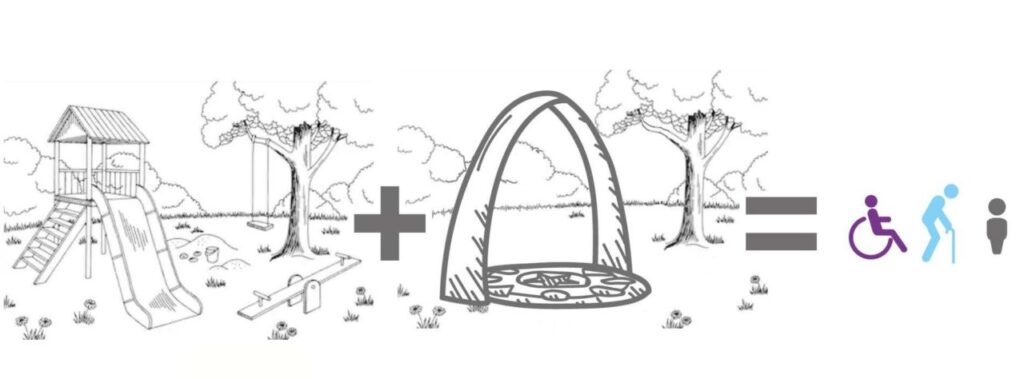
For example, I scored a standard playground consisting of a swing, sandbox, play tower with a slide and climbing element. I rated this playground with 52 points (see table). Next, I scored one Yalp Sona Interactive dance and play arch along with the same measurements, scoring 90 points. When dividing the budget by the score, you find the investment rate is lower with the Sona.
Please do not make false conclusions. In my perfect world, I would opt to raise the budget to combine traditional with interactive play.
In conclusion, please consider doing things differently and with a clear vision of what you want to achieve. In the playground business, I preach to look more to the earnings. This might add much more value to your city or business. You might surprise yourself seeing elderly play together with teens and small children and others challenging each other and having even more FUN together.
Play-is-on.

We’re here to answer any questions! Contact us at info@eliteareas.gr .
- Published in Technology, yalp
Furnishing the future: How smart street furniture helps cities evolve

Author: Milos Milisavljevic, CEO of Strawberry energy
If there was an app giving you real time data about the most crowded shops to avoid or the longest check-out lines during the Christmas shopping fever, you’d welcome that, wouldn’t you? It would require a comprehensively vast digital network of IoT devices, people counters, interconnected shopping malls, a massive amount of data processed in real time. Of course, it doesn’t exist. At least not yet. Furnishing cities with smart technology, building IoT infrastructure and sustainable solutions is slowly becoming the big talking point, a task on every local government’s agenda.
When you dedicate yourself to furnishing your home every detail matters. You start from picking out the comfortable, nicely looking pieces that fulfill your standards of functionality and esthetics. And when you’re done, you call it home. In the recent decade our homes have become increasingly smarter with gadgets helping us or entertaining us every step of the way.
It is no surprise that the need for embedding technology in our public spaces has also become a prerequisite for being comfortable and efficient while running errands out and about the town.

Just like our home, we all want our cities to follow the development, to upgrade and start adapting to our life already submerged in technology so deep that it is an integral part of who we are today as civilisation. But what does it take to furnish a city, to equip it with smart solutions that would not only make our life easier, but also reduce costs, be easy on the local budget and not harm the environment? Is it possible?
In order to talk about the smart city furniture, let’s start with the obvious. What is street furniture to begin with? It includes benches, traffic barriers, bollards, post boxes, streetlamps, traffic lights, traffic signs, bus stops, tram stops, taxi stands, public lavatories, fountains, public sculptures, and waste receptacles. When we want to make all that street furniture “smart” we actually want for it to be more functional, to make our life easier without the cost to the environment.
Smart waste management doesn’t waste time
A decade ago, garbage trucks and sanitation workers would go around at precisely scheduled times, every day, to empty the bins around town so they’d be clean and ready for the new busy day. Of course, a bin in a park near a popular picnic spot or at a busy street is much more likely to be full by the afternoon. Sometimes overflowing with trash by the mid-day. Wouldn’t it be nice if somehow sanitation services would be able to know exactly which bin needs attention and when so that they could plan the collecting routes more efficiently?

Today, smart bins are connected to WiFi and equipped with fill-level sensors that track the situation in real time and send data that the bin needs to be taken care of. Majority of smart bins can be found in France, Germany and the UK, but also in various USA cities and Canada. It’s not a surprise that smart waste management ideas that are sustainable, reasonably priced and efficient in the long term are in high demand.
Next stop: Smart city
Waiting for the bus is a dramatically different experience than 15 years ago when there were no smartphones (as we know them today) or mobile Internet to pass the time. In recent years smart city development has offered us another WiFI connected convenience and experience: a smart bus stop. While you wait for the bus you can check the real time traffic data, pay your bills, top up your phone credit, check pollen and noise levels and in case of emergency there are emergency call boxes, defibrillators and fire extinguishers. Singapore’s smart bus stop network offers free WiFi, phone chargers and in some cases even bookshelves where people can read and swap for the books they have already read. Barselona’s smart bus stops offer detailed tourist info and maps and free WiFi so in a way, every smart bus stop is essentially a tourist info desk.
Stuck in traffic? Not if you’re smart!
Copenhagen municipal government claims that 25,000 tons of CO2 will be reduced by 2025 compared to 2011 levels. How do they plan to carry out that task? Through the city’s ITS (Intelligent Transport System) program. Controllers built in existing traffic lights on busy intersections will control the traffic in real time by favouring cyclists and public transportation. According to globalexplorer.com “Overall, the travel time of cyclists will be reduced by 10% and travel time for buses is expected to decrease by up to 20%… ITS will help Copenhagen achieve its vision to have 75% of all trips in the city be by bike, by public transport, or on foot by 2025.” Benefits for the environment that this measure would bring are quite substantial and if successful, will once again put Copenhagen on the list of one of the most successful cities when it comes to implementing smart technologies to elevate the quality of living.

Smart bench — The new benchmark for smart cities
In 2011, a small startup Strawberry Energy wanted to find new ways to reimagine the city furniture by adding solar panels and phone charging ports powered by solar energy to their project — Strawberry tree. It was a success because it recognized the growing need for connectivity and addressing the environmental issues. In 2015 the first smart bench was installed in London followed by the network of smart benches in 2016 and the presence in more than 25 cities in Europe.

Smart bench has reinvented the “bench time” as we know it. We still sit on a bench to relax, meet up, take a break or eat take out lunch. But as we do it, we also browse the internet using the free and fast WiFi, charge the phone or check the environmental data for the area.
Advertisers gained a new territory to expand their influence and reach the audience. Branded smart bench also offers a branded landing page that pops up when people connect to free WiFi on the bench, allowing an advertiser to display a more personal and customized message for the desired audience depending on the time, weather conditions or current events. The smart bench measures engagement, number of chargings and visitor count, representing a valuable insight into consumer behavior, and above all, promotes the advertiser’s CSR efforts and positions the company as an environmentally aware and proactive.

At the end of year 2020 we already have smart waste bins, smart benches, smart bus stops and smart traffic lights. What the future holds for us and our cities? As it is expected that the AI propels into our life more prominently, no one can reliably predict what impact it will have on urban infrastructure, community engagement and digital transformation. What we can say for sure is that street furniture will definitely become smarter, even cooler and more sustainable.

Do something smart for your city! We’re here to answer any questions! Let’s talk! Contact us at info@eliteareas.gr .
- Published in smart, strawberry
South Park, San Francisco
Written by Berliner Seilfabrik Team
South Park, San Francisco’s oldest public park, is a unique and historical area. The park, modeled after an English strolling park, was originally built as the centerpiece of this exclusive neighborhood. Years of activity, however, took their toll and the park fell into disrepair.

The Recreation Park Department, South Park Improvement Association, park neighbors and community leaders wanted to restore it to its original glory. Fletcher Studio Landscape Architecture, an award-winning landscape architecture firm, was commissioned to develop a master plan for the park, bringing the revitalized vision to reality. The new design can be described as a contemporary interpretation of the English strolling garden.

The project entailed upgrading the park’s infrastructure, including new paths, irrigation, drainage, site lighting, landscaping, swooping meadows and a new stage area for performances.

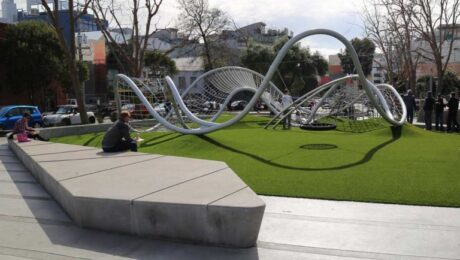
One striking addition: a custom universal play area with undulating forms both in structure and in the mounded surface. This flowing contemporary design by Fletcher and the 100% custom designed structure by Berliner makes it a truly one-of-a-kind design, one that has never been done before!

David Yosso, President of Specified Play Equipment Company and Berliner’s exclusive representative for Northern California, calls the South Park design a “sculptural, playful art piece designed for all ages and imaginations.”

From a bird’s eye view, the play structure appears to be a perfect circle. From an elevation view, you see the undulations and curvatures.
The undulating curvatures rise from two feet to 10 feet with no visible upright posts. All posts, six of them, are below grade. The mounding underneath the playground follows the curvature of the equipment, effectively hiding the upright posts and making the structure appear to float.

The different types of nets offer various degrees of challenge with plenty of footing and handholds for children to safely climb up and down, horizontally and vertically. Net climbers offer visual transparency, keeping sight lines open.
Berliner’s proprietary Charlotte Connectors, which make the rope ends disappear inside the steel tubes, allow for tension adjustments to be made on site, resulting in a more harmonic net geometry as well as improved longevity.

This structure offers a perfect example of the optimum amount of risk with no single route and no known conclusion!
The modern, almost industrial color choice reinforces the concept that this is more than a playground; it is almost like public art, complementing the many tech-related and design companies that call South Park home.
Play elements integrated into the flowing design include a banister, which provides an elegant alternative to a slide, and a multi-user, accessible saucer swing.

The playground in any community provides a distinctive landmark; however, South Park is more than a playground. It provides a lesson in redesigning a public space; combining the play value needed by children with the aesthetic appeal and style desired by adults – making it the perfect place for the whole family.
This is a project reference of Berliner Seilfabrik, in San Francisco. All photos courtesy of Fangzhour Miao and Chris Watkins. If you would like to create a relevant custom-made solution in Greece or Cyprus, please do not hesitate to contact with us at info@eliteareas.gr
- Published in berliner
Open up those Outside Spaces!

Pandemic is Catalyst for Extending Visitor Experiences Outside
As venues adjust their procedures and reduce visitor capacities to ensure they can welcome guests back safely, there has been a renewed focus on the great outdoors that has seen outside spaces, however large or small, becoming key investment areas and successful intersections between wellbeing, the arts, and great family connections.

Making the most of outdoor spaces now and into the future has become a priority; with guests feeling more comfortable spending time outside where they can keep a safe distance from other visitors while enjoying their family day out.
With many museums and attractions having to rethink their programs, shift their focus, and activate their outdoor spaces to offer open-air activities, exhibitions, and events, perhaps they should look to outdoor music as a gateway to the performing arts as well as a fun, engaging family learning experience?
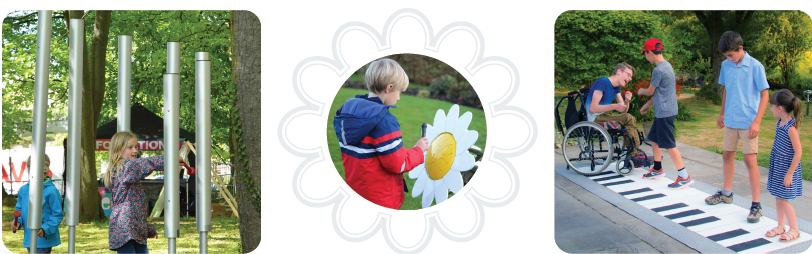
Due to its universal appeal, music can successfully bridge intergenerational gaps. The creation of outdoor music zones for spontaneous music-making, using real-life musical instruments that are holistically interactive, engage multiple senses and are responsive, will be enjoyed by everyone – regardless of age or ability. Knowledge of music, keys, or scales is not required just the willingness to have a go and outdoor musical instruments, with their emphasis on family and multi-generational participation, will make a welcome change or refreshing addition to play spaces or discovery zones outside.
Children learn through play and experimentation and by watching and listening to the grownups they love. Participating in music activities together is the best thing any parent or caregiver can do to help set a child on the road to a lifelong love of music. Music areas or zones are a great way for families and guests to take a calm moment away from the excitement of the main attractions, step away from the crowds, decompress and experience a different kind of activity together. The collection of outdoor musical instruments available represent music-making from many cultures from around the world and therefore invite children and their families to explore global music, rhythms and movement whilst enjoying bursts of post lockdown musical creativity.

One of the many benefits of outdoor musical instruments is they can be installed almost anywhere; indoors or outdoors, on grass, on concrete, on decking, walls, or – in the case of the brand new ‘Stepping Stones’ – even underground! As the instruments are intended to be played while standing on the ground, they do not have any requirements for expensive impact-absorbing safer surfacing and require only a little routine maintenance. The instruments will make robust interactive exhibits that are designed to withstand the elements and live outside all year.
The ending of self-isolation will undoubtedly result in a resurgence of interest in authentic museum and family attraction experiences that cannot be replicated at home online. The addition of a few musical elements outdoors is a reliable way to generate interest and provide unique, educational content to guests while demonstrating an innovative solution to the social distancing challenges presented by COVID-19.
- Published in percussion-play
Rope Play Takes Inclusive Play to a New Level
Written by Berliner Seilfabrik Team
Goggle “INCLUSIVE PLAY” or “inclusive playgrounds” and you will find pages of entries – what it is, where you can find such playgrounds, who offers “inclusive playground equipment” and more.
Delve into this more and you will also find that many traditional inclusive playgrounds primarily focus on children with physical disabilities, failing to include those without physical disabilities or those without disabilities at all.
This raises the question: what kind of inclusion experience is it if it is neglecting over 90% of children who don’t have any disabilities at all to play?
There are many kinds of playground equipment that provide an “inclusive” experience; however, rope play equipment, net climbers, offer something for everyone, providing a more unique and ever-challenging experience for all abilities.

So, What is Inclusive Play?
In general, inclusive play bridges the gap between mainstream and children with special needs. Inclusive play enables children to better relate to one another, whether they have a special need or not, opening their eyes to the world around them.
Inclusive play enables better social integration. Learning about each other’s differences at a younger age can help children feel comfortable around those who are different.
Many children happily play together without noticing any differences. Encouraging children of all abilities to play together teaches them to treat each other the same.
Accessible or Inclusive Playground – What’s the Difference?
A 100% accessible playground goes beyond ADA Compliance, enabling
everyone to get to and move all around the playground. Children in wheelchairs could, for instance, reach the highest point of a structure through ramps. Being ADA Compliant Means…
All new and renovated parks must have an accessible path leading to the playground with nothing blocking it. A paved path and railing facilitates access for children with disabilities and helps meet ADA regulations. Integrating a very tightly stretched rope, for example, into the playground may make the use of a cane for a visually impaired child unnecessary, freeing the child’s hands for climbing. On the other hand, an inclusive playground accounts for human diversity in the community. That means, it offers barrier-free attractions while at the same time providing challenging and fun experiences for a wide variety of children – those without any disabilities along with those with ADHD, Down’s syndrome, sensory processing, visual or hearing impairments and other physical and developmental issues.

An inclusive playground offers a balance of play experiences for all abilities, achieving parallel play as much as possible. It enables children to embrace and experience their commonalities and differences as autonomously as possible and in close proximity to one another.
It is not about “leveling down” the experience nor is it necessary to remove every sandbox so that a child with little mobility does not notice that he or she cannot run.
Inclusive play and accessible play are often lumped together when accessibility is only a small part of what makes a playground inclusive. The ramps alone are merely an accessibility device and do not by themselves lead to engagement with other children. On the other hand, rope play equipment does.
How Rope Play Adds to the Inclusive Experience
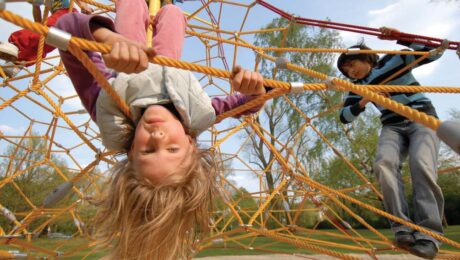
Net structures, or rope play equipment, only serve to enhance the play experience for children, whether at an accessible or inclusive playground. The unique free play and net climbing configurations challenge a child’s motor skills, increase their self-confidence, stimulate imaginative play and improve muscle development and balancing skills.
One strength of rope play equipment lies in the motor challenge that they pose to children along with the endless play options. When climbing, a child’s progress requires control and focus, each step and each grip is a new decision, keeping it challenging and fun every time.

3-Dimensional vs. 2-Dimensional Rope Equipment
Two-dimensional rope structures offer paths for a child to climb vertically, horizontally or possibly across on a bridge or link.
Three-dimensional rope structures come in all shapes and sizes and are commonly referred to as space nets and net climbers. Structures can be quite tall or closer to the ground and full of low course challeng- es or a mix of both, enhancing the play experience with:
- No prescribed entry points
- No specific paths to be followed
- Open environment encourag- ing social interaction
One strength of rope play equipment lies in the motor challenge that they pose to children along with the endless play options. When climbing, a child’s progress requires control and focus, each step and each grip is a new decision, keeping it challenging and fun every time.

For every action, there is a reaction. As one child is climbing the rope structure, it causes a reaction to the other side of the structure. For children who have limited mobility or do not have the strength or desire to climb the structure, he or she can hold the rope and feel its movement, swaying back and forth, and be included in the play with others. Rope play equipment combines different difficulty levels in a single play element. For instance, older children or young adults who like to climb can romp in sections with larger distances between the ropes while younger children can test their motor skills in sections with narrower distances between the ropes. Children of all ages (and sizes) are part of the play experience.
A 3-dimensional net structure has no prescribed entry or exit point; it is up to the child to decide where to go in or come out. is, too, leads to endless play options.
It is important to note that play- grounds must meet all standards and rules of the ADA. That means that all play equipment of a certain size must have some type of transfer module, such as a transfer station or ramp, installed enabling a child to move (or transfer) from his or her wheelchair on to the play structure. The use of transfer modules enables a child in a wheelchair to reach play equipment such as a slide, providing him or her with an easy climbing challenge.

Transfer stations and ramps are not the only viable tools to ensure accessibility. The standard leaves room for alternate solutions if they result in equivalent or better usage. Access nets or other close to the ground nets meet that criteria.
On most rope structures the entire base perimeter serves as a transfer point to the climber. There is no need for an additional transfer module/deck. Rope play equipment encourages children to leave the wheelchair whenever possible.
Rope playground equipment with built-in seats, such as nest swings, are very accessible to children in wheelchairs. The spacious lying area often enables children with or without disabilities to swing together, encouraging social interaction.
The challenging nature of a low-level rope course offers visually impaired children the opportunity to climb safely as well as allowing children with hearing impairments to use sign language without hindrance.
The ropes make communicating among the children and their caregivers much easier. Some children may not speak or hear well. Play can be a wonderful tool for them to use to communicate. The transparency of the net structure enables children to use sign language when playing and eliminates barriers to visual supervision even on very busy playgrounds.
Rope equipment can incorporate elements that allow auditory, visual and tactile sensory experiences, which can capture a child’s interest, especially in children with a form of autism spectrum disorder or sensory processing disorder.
Net climbers provide a play space that brings together children with different abilities – those that may have a visual or hearing impairment, physical or mental disability or other developmental challenge – enabling them to experience their possibilities and their limits in common play, encouraging understanding and acceptance of one another.
If you would like to create a custom-made solution in Greece or Cyprus, please do not hesitate to contact with us at info@eliteareas.gr
- Published in berliner
The world’s first network of smart benches in London
Strawberry Energy and MKTG rolled out 10 smart benches in London with the charity of 2017
Smart city business Strawberry Energy UK has joined forces with London boroughs of Lewisham and Islington and Cancer Research UK to launch a network of Smart Benches (#SmartBenchUK) with contactless technology in time for World Cancer Day on 4th February. The solar-powered benches enhance public spaces by providing mobile device charging ports and free Wi-Fi access, as well as a place to sit and socialise.

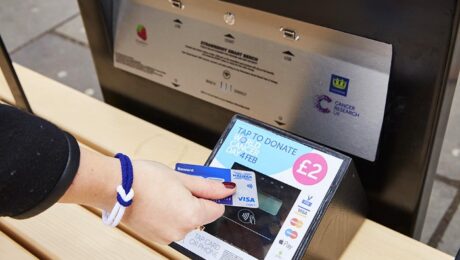
In the world’s first use of contactless payment on the Smart Bench, the public can also donate £2 to the charity’s life-saving research to beat cancer sooner, by simply tapping their contactless debit or credit card on the Smart Bench, popping up across London.

Strawberry Energy has been working exclusively with Urban Partnerships, a division of MKTG which delivers projects within the public space that are mutually beneficial for both brands and non-profit organisations.
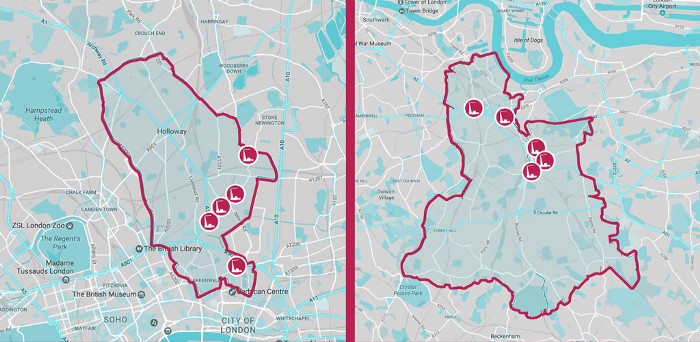
Cancer Research UK is the first brand to partner on the Smart Bench scheme, a network of benches across two London boroughs (Islington and Lewisham). The sites were identified as high-footfall locations by MKTG, using their strategic insight tools and location planning expertise.

This pilot of 10 Smart Benches has been installed on 31 January with full support from both boroughs, and feature a number of contactless payment locations including Islington Green and Lewisham High Street. Following the pilot, a further 10 will be installed by the end of February.
Sensors built into the smart benches monitor real-time environmental data including air quality, which users can check via the Strawberry Energy smartphone app, providing a valuable lifestyle tool for the community and feeding important data to local boroughs. This is especially relevant in support of London Mayor Sadiq Khan’s aim to improve the capital’s air quality. Strawberry Energy (www.smartbench.london) has taken on production and installation of the first benches, without cost to taxpayers, as part of the company’s commitment to London as a smart city.
Miloš Milisavljević, founder and CEO of Strawberry Energy, developers and owners of the Smart Bench network, said: “We have been working with London boroughs to breathe life into our dream of a network of solar-powered Smart Benches, making energy free for all Londoners. We are proud to launch our network in the lead up to World Cancer Day with a contactless fundraising innovation in aid of Cancer Research UK.
“Our charging stations bring people together, motivate them to spend more time outdoors, and enhance their enjoyment of the environment with information such as pollution sensors.

Cllr Claudia Webbe, Islington Council’s executive member for environment and transport, said: “We are committed to making Islington a place where everyone can enjoy an excellent quality of life. These pioneering Smart Benches offer the best advances in smart technology and we are very pleased Islington is one of the first places in London to trial Smart Benches, and look forward to seeing how they benefit residents, workers and visitors alike.”

Councillor Rachel Onikosi, Lewisham Cabinet Member for the Public Realm, said “I’m very pleased that Lewisham is part of the start of this network of smart benches. Finding creative ways to make the most of our public spaces benefits local communities and attracts people to come and see the great things Lewisham has to offer.”
Paul Weaver, digital innovation manager at Cancer Research UK, said: “Having used contactless technology in innovative ways in the past to engage the public in the work we do, we are always looking for new opportunities to incorporate contactless technology further throughout the charity and make it even easier for our supporters to help us beat cancer sooner. These Smart Benches seemed like the next step in our use of contactless technology to bring charitable giving closer to our supporters, integrating it seamlessly into cutting-edge street furniture.”
MKTG’s Urban Partnerships identified Cancer Research UK as an ideal first brand partner for Strawberry Energy and their Smart Bench network. The community can enjoy the benefits of the benches and in exchange, Cancer Research UK can maximise awareness and donations through contactless technology in the lead up to World Cancer Day.
Michael Brown, Managing Director, MKTG said: “Research shows the way in which consumers perceive brands has a huge influence on the effectiveness of that brand’s advertising. The Smart Bench network provides an opportunity for brands and local boroughs to create positive, impactful experiences for communities, who benefit from the various smart utilities provided by the network. Partnering with Strawberry Energy, we’re very excited to launch the Smart Bench Network initially with Cancer Research UK, an opportunity that will be open to more brands in the future.”

As well as making donations via these Smart Benches, Cancer Research UK is also urging the nation to wear a Unity Band® on 4 February 2017, World Cancer Day, creating one incredible #ActofUnity that will help beat cancer sooner. Get your Unity Band online for a suggested donation of £2.
Are you interested in running a successful campaign? We’re here to answer any questions! Let’s talk! Contact us at info@eliteareas.gr .
- Published in smart, strawberry
Margaret Mahy Family Playground in Christchurch, New Zealand
Written by Berliner Seilfabrik Team
With the opening of Margaret Mahy Playground in Christchurch, New Zealand, June 25th 2016, one of the largest and most modern playgrounds in the southern hemisphere has arisen. It was built after the major earthquake that struck New Zealand in February 2011, which affected Christchurch in particular. The project was meaningful for all those involved, but in particular for the area’s inhabitants and visitors to the playground.

The detailed planning phase from early 2013 to mid-2015 included a playground design competition held among schools in the Canterbury region. Entries to this competition helped inspire the final design as drawn up by Berliner Seilfabrik.

The playground’s layout is based on Canterbury’s four main natural habitats: “The Forest”, “The Wetlands”, “The Plains” and “Coastal”. It consists of two different parts. The first section of the playground includes a large custom-made net of 22,5 m x 15 m, stretched across two enormous masts. The net is fixed through a total of 15 anchor points whose foundations are at different heights.

One of the greatest challenges facing the team at Berliner’s Creative Centre was to procure reliable topographical data from the park designers on the ground, since the creation of artificial hills was envisaged as part of the park’s landscape. “An inaccurate calculation of a few centimetres in height difference can lead to a misfit of the whole net. This results either in a sag or a net being too short.”, Marius Kotte, Architect and Head of Construction and Development said.

To prevent this, playground concepts were created, based on which preliminary drafts were then drawn up and offered. With the completion of landscape modelling, the entire site was surveyed. The resulting three-dimensional data set was used by Berliner Seilfabrik to create a virtual site. Based on this, the play structure was conceived, manufactured and installed on site with the utmost precision.
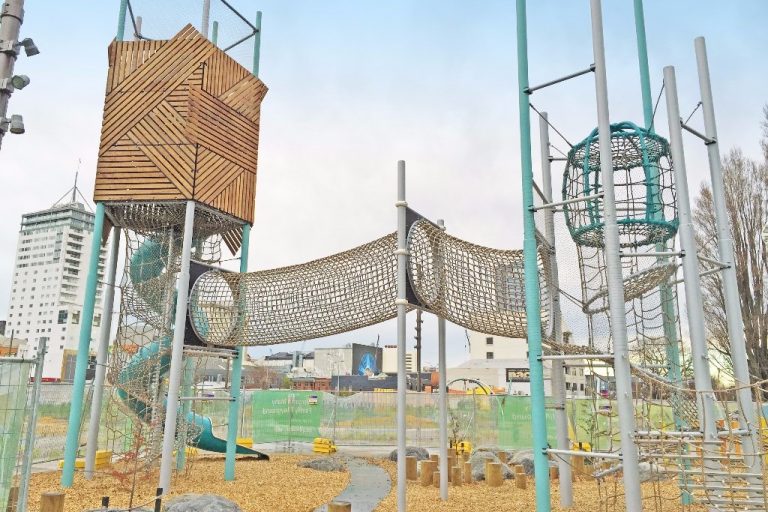
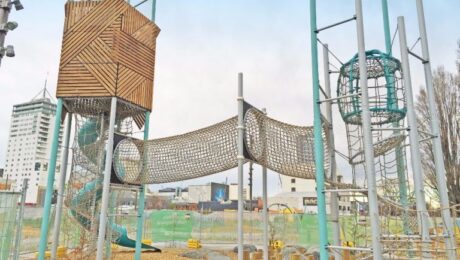
The playground’s second section is characterised by a gigantic tower combination designed and built by Berliner Seilfabrik. The structure consists of three large towers enabling children to climb up to eight meters above ground level. A spectacular spiral slide transports children from the top back down to ground level. Each tower is enhanced by bamboo panels, which has led to their being included in Berliner’s Greenville Towers & Triis product range. “The architect requested special posts and therefore we could not use our standard connector tube.

That’s why we invented a new fastening system which bears high design requirements and the long transportation route to New Zealand. The fact that welding on site was impossible was considered, too.”, Marius Kotte says. To ensure the identification of the individual posts in New Zealand, they have been marked by laser engraving.

As a result, a new and wonderful playground is now located in the Heart of Christchurch. Not only kids are excited, but also their parents and even their grandparents. Leez O’Connell took her granddaughter to enjoy the slide despite the rain. “I think it’s fantastic. Kids aren’t allowed to climb trees or anything anymore. So I really like seeing them all climbing up there and getting a bit scared. It’s so good for them,” she said in New Zealand´s Newspaper THE PRESS.
This is a project reference of Berliner Seilfabrik, in New Zealand. If you would like to create a relevant custom-made solution in Greece or Cyprus, please do not hesitate to contact with us at info@eliteareas.gr
- Published in berliner
Building in the time if Proptech

| Why your property development projects should smarten up?
Proptech might be a buzz word but it’s a word that any prospect investor, property developer or business leader should take seriously. Whether we are talking about shopping malls, business premises or residential areas — developing a property means looking into the future. Factoring in numbers and basic facts such as location, quality of construction, return on investment, market volatility predictions etc. — it’s clear that this is not an easy decision-making process. But if we put the fast-changing technology and sustainability challenges into this equation, it only gets more complicated.
In our digital era of hyper connectivity where people are online every waking minute and interacting with their physical surroundings in a completely different way than 10 years ago, taking into consideration how your premises correspond to new technologies is crucial. And proptech is exactly that: any technology that makes your real estate smarter and more beneficial to its visitors or residents.
How can Strawberry energy Smart Bench improve any property that seeks to attract more visitors or make everyday life in a residential area more pleasant and environmentally friendlier? To answer this question, let’s take a look at 3 important fields of property development: shopping malls / consumer interaction points, business premises and residential areas.
It’s not about shopping anymore. It’s about hanging out.
In the last decade of 20th century, shopping malls were one of the major points of interaction between a customer and a wide variety of brands — from food to retail and entertainment. Business Insider reports that “about 15% of malls in the USA will disappear in the next decade, according to a study by Green Street Advisors.” Is there a way to increase the “foot traffic” rates in the malls and retain shoppers longer on your business premises?

As technology evolves, shoppers expect the surroundings to correspond to that change. Consumers are more likely to visit the premises and do chores, seek entertainment and spend time at places where the technology works to their benefit. A forward-thinking commercial property developer will, for that reason, include several non — commercial relaxation points where visitors can relax, hang out, check their messages, charge phones and spend time without actually spending money. The benefit here is a two — way street. And that’s precisely what we had in mind when we designed our Smart Bench Mini — connectivity, relaxation and meaningful interaction for consumers but also a substantial benefit for advertisers and businesses. A possibility for shoppers to connect to WiFi via customised landing page. Smart Bench also generates reports on total number of WiFi connections and charging, total duration of charging etc. so that investors can have a clear picture of the usage statistics. All that with no maintenance required and zero carbon footprint.
Consumer relationship starts at your headquarters!
Your company is expanding, you want to hire more professionals and offer them the next-level comfortable and modern business premises that transpire high standards of your business ethics and do not compromise on environmental and aesthetic principles. Proptech solutions should be part of your real estate management requirements. It’s easy to be envious of Google or any other Silicon Valley headquarters with enormous amounts of money invested into acquiring a sustainable, wide, enjoyable and posh premises. But you can do as much as focus on your employees and clients, visitors coming to your headquarters or business locations and offer them a unique and interesting hangout place. Small talk is migrating from water coolers to outdoors, as many people want to spend their breaks outside, soaking up the sun and enjoying some fresh air. Making that experience more comfortable and enjoyable and showing that you not only take care of your employees and offer some added value to their work hours but also take care of the environment and invest in new technologies — really goes a long way, as any CSR manager would tell you.

That free hotel Wi — Fi you always wanted!
Hospitality industry is a good example of how small investment can elevate consumer experience and attract new clients. In the age of AirBnB, hotels and resorts are inclined to find new innovative incentives to engage and amaze. Sometimes a small addition can be a decisive factor for travellers. Like a solar bench by the pool where guests of the hotel can charge their phones and get information on humidity, temperature, but also make countless selfies, post them right away via free and fast WiFi network and tag your hotel. That right there is visibility for your brand that you couldn’t have hoped for.
Neighbourhood is the extension of home
Property developers know that incorporating modern technology is the best way to signal the high quality, expertise and strong vision for the future. Smart bench strikes several key factors that prospect residents are interested in: connectivity, modern design, social impact and green energy. A nice old-fashioned bench in the neighbourhood or at the apartment complex is always a good idea, but modern city dwellers demand more. They want to be informed, connected and in touch with their surroundings. As their homes become smarter, they expect the same from their neighbourhoods. Smart Bench is a spot for socialising, information and relaxation, fueled by green energy and with environmental impact of a regular bench. It can be branded and thus connect the residents to their local store or a brand they care about in a more meaningful and interesting way.

We’re here to answer any questions! Contact us at info@eliteareas.gr .
- Published in smart, strawberry
10 Reasons why outdoor training is better than a gym workout


1. It lowers blood pressure and reduces stress
Studies have shown that physical activity outdoors lowers a person’s blood pressure and heart rate. As a result, exercise outdoors feels less strenuous than similar exercise indoors, which, in turn, pushes you closer to your maximum performance. Train outdoors, push yourself to the limit, and keep breaking your personal record!
2. Helps with insomnia
When you exercise outdoors, you get fresh air which helps to alleviate insomnia. Regular exercise and fresh air will help you to fall asleep and improve the quality of your sleep!
3. Sunshine
When training outdoors, you can also enjoy the benefits of sunshine. Fresh outdoor air and natural light invigorate and provide more energy for the mind and body. Sunshine provides the vitamin D that we need, you will get a suntan while training, and the sun will lift your spirits! Sunlight also enhances energy generation in the muscles and oxidation of the tissues.
When training outdoors, consider the possible harm caused by excessive sunlight, such as dehydration and sunburn. So don’t forget protective sunscreen and hydration while training outdoors!
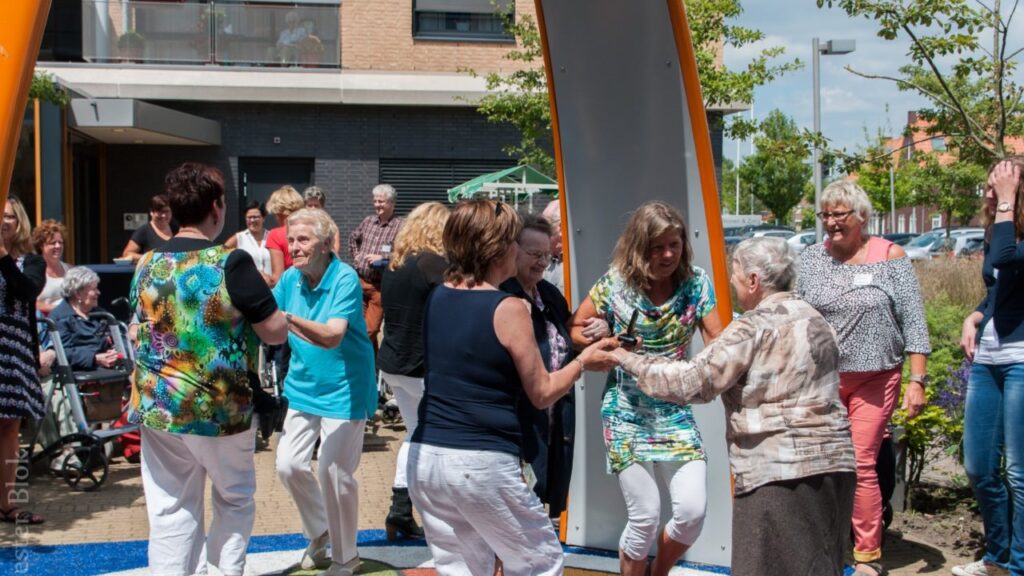
4. Free of charge
Outdoor workouts are often completely free of charge because exercise parks, sports tracks, stairs, and other exercise locations outdoors are usually open to all and free of charge. Outdoor exercise is good for your wallet!
5. Saves time and nature
Think creatively about your surroundings and devise an intensive training session on a nearby jogging track, hill, or stairs, for example. Training locations are often closer than you think! Using nearby locations saves not only time but also natural resources since there is no need to take your car to your workout. Did you know that you can also find Yalp Interactive play and sports equipment nearby using our Activity Map?
6. Variation in your regular workout
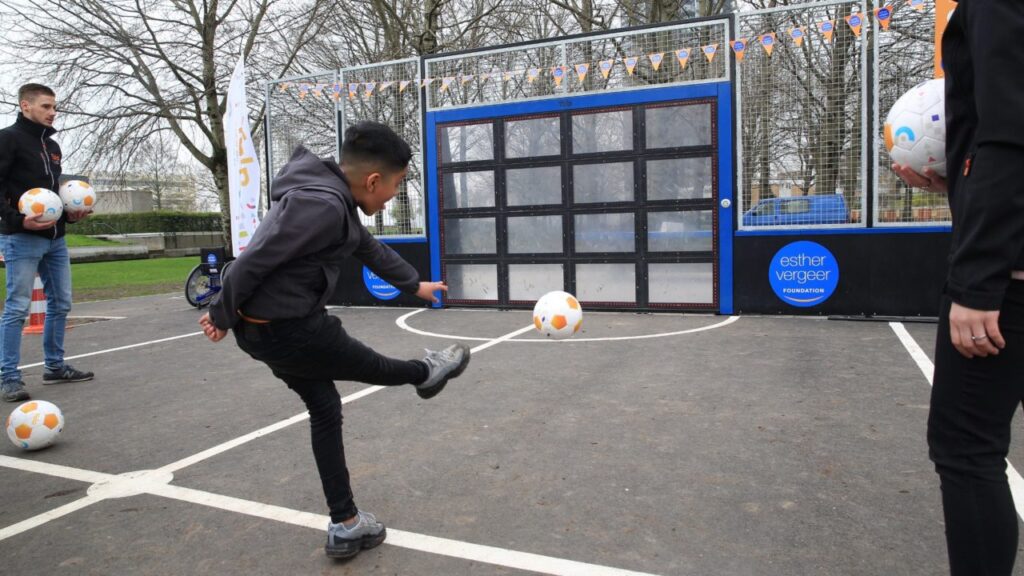
Break the routine! Perform your indoor workout outdoors and include movements such as aerobics exercise. Did you know we have a variety of fitness games to choose from!
7. The chance to try something new
Take your workout to a new level, try something new! Take advantage of new training opportunities to add content to your standard workout, or create a whole new routine. Have you already tried activities such as parkour or street workout? Make your workout different, more effective, and refreshing!
8. Vary your regular training environment
Leave the stuffy and dark gym behind and do your workout in a fresh and bright setting outdoors, enjoying the multiple benefits of an outdoor workout. Cities offer a multitude of workout venues. Exercise parks, sports fields, stairs, and exercise areas along jogging trails provide a range of opportunities to diversify your workout and explore new training places.
9. The chance to train together
Most outdoor workout sites such as sports parks and tracks are open to everyone, free of charge. This will enable you to train and spend time exercising together with your friends and nearest and dearest, who do not go to the same gym with you. Moreover, training outdoors is an excellent opportunity to meet new people while performing your workout!
10. Better mood
All in all, outdoor exercise benefits the whole body by bringing joy, well-being, and a better mood!

If you would like further information on how the interactive playsets can benefit you; We would be more than happy to join forces with you and find the best solution tailored to your wishes. We’re here to answer any questions! Contact us at info@eliteareas.gr .
- Published in Technology, yalp
