
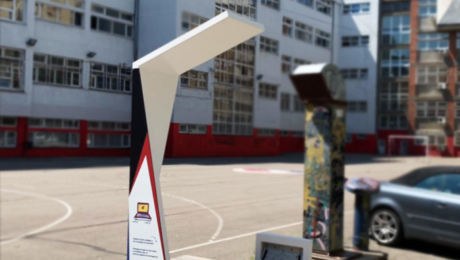
Ministry of Trade, tourism and telecommunication of Serbia started a platform for elementary students, “IT caravan”, which promotes the application of digital technologies and internet in education and their safe use. Competition is annual, and includes 2000 pupils from more than 25 elementary schools in Serbia.

Problem Description
Ministry wanted to award winning schools and their students with solution that would be digital, innovative, yet demonstrate digital transformation in easy to understand manner.
Solution
Strawberry Energy Smart Bench was chosen as an award for the winner of “IT caravan” competition, because of its unique combination of physical presence (it is a bench) and digital assets (it provides charging, WiFi internet, customized landing page), and IoT (environmental sensors). It is good example of how digital transformation can influence many aspects of our lives, even urban furniture. It is installed in the school’s playground.
Personal quote from the client
“I am convinced that Smart Bench will become a new place for socializing, as pupils will be able to charge their mobile phones, browse the internet, but also to find out the temperature, humidity, level of CO2 or noise in their environment.”
Tatjana Matic, State secretary at Ministry of Trade, Tourism and Telecommunications
We’re here to answer any questions! Contact us at info@eliteareas.gr .
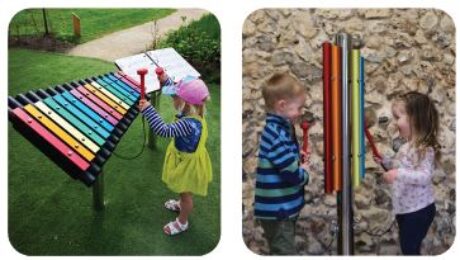
Open-ended play is vital to a child’s development. It enables learning in a truly holistic way, through active play and exploration – with no instruction or direction. With no pre-determined limitations and no fixed answer – open-ended play means children simply follow their imagination and allow the play to go in any direction their creativity takes them. As there are no set outcomes, there is no right or wrong way to play – no rules, no expectations, no specific problems to solve, and no pressure to produce a finished product.

The Benefits of Open-Ended Play
The benefits for children engaging in open-ended play are numerous. Allowing for self-directed exploration and repetitive behaviors gives children the chance to experiment and consolidate their learning. Open-ended resources support this creativity while resources that are made for a purpose have a fixed outcome e.g. a large cardboard box can be a car, a shop, a spaceship whereas a puzzle will always be a puzzle. While it has its own educational benefits, it will only ever be one thing.
The creative nature of open-ended play also enhances cognitive skills, such as working memory, cognitive flexibility, self-regulation, and self-discovery.
Children can focus on ‘creating’, based on their inner inspiration and motivation. It is an outlet for a stream of continuous thought development and expression. Open-ended play links directly with the Early Years Foundation Stage, allowing practitioners to observe children using a multitude of skills – for example creating props to support role-play or investigating shape, space, and measure. These observations also link to the Characteristics of Effective Learning – fostering opportunities for children to create and think critically, play and explore and be active in their learning.

Music Fosters Open Ended Play
Unstructured outdoor musical play offers opportunities for children to discover ways to express their thoughts, ideas, and feelings, and improvising with music is a wonderful way to foster open-ended play. Outdoor musical instruments located in parks and playgrounds allow children to explore their musical selves, including their originality, and offer a safe, secure space in which to experiment with improvisation.
Open-ended musical play differs from teacher-structured music time in an educational setting. Initiated by children of their own volition and intrinsically motivated, play and participation prevail performance. This is critical since many self-confidence issues regarding music and the performing arts are centered around the idea that you can “get it wrong” or that what you’ve created is less than perfect. Many of the Percussion Play outdoor musical instruments are tuned to a simple five-note musical scale called the pentatonic scale. Pentatonic scale notes are harmonious in whichever order they are played and great for developing musical skills and technique without tuition. Since it is impossible to play a ‘wrong’ note anyone can create music that sounds good – building the confidence of inexperienced or very young musicians and encouraging spontaneous musical behavior. Suddenly, musical composition isn’t just for prodigies – it’s a form of artistic expression that every child is capable of doing, free to experiment with new concepts as they realize there’s no right or wrong way to engage.
Although children are surrounded daily by a variety of musical experiences, there are fewer and fewer opportunities for them to actively and freely engage in the music-making itself. Modern life means they’re inundated with melodies emitted from computer games, phones, TV shows, and toys, meaning most of the music they encounter is “unchosen,” making them passive recipients of the music in their lives and not actively engaged in its selection or making. Given the chance, children are natural composers and love to experiment with the sounds all around them. The freedom of improvisation has significant effects on the development of a child’s creative musical thinking, and that musical originality—the way the child uniquely manipulates musical sounds—increases along with their musical potential.

Open-Play Environments to Practice and Hone Key Skills
Children grow emotionally, socially, creatively, and cognitively through spontaneous music and movement, with their impromptu musical performances often revealing what they are thinking, seeing, or doing. Even when their language isn’t quite at a level to articulate their fears, excitements, or opinions, the type of music they produce during open-ended play will speak volumes.
It is imperative that young children are given access to environments that support this musical freedom, interaction, and development as well as the time to enjoy them. The permanence of outdoor musical instruments means no tidying away at the end of the day, allowing children to constantly revisit and tweak their musical compositions or repeat their choice of learning – allowing them to merge all the information they have gathered when experimenting with pitch, tempo, and dynamics.
Playgrounds are an awesome place to encourage open-ended play. Spaces that children of all backgrounds can enjoy in play areas that fuel young imaginations, encourage interaction and engage all of the senses.

Encouraging Open-Ended Play
Open-ended play strips away all rules, expectations, and time frames, and encourages children to think for themselves. Children learn to react better in situations, they learn to make choices, and they feel more inspired. When a child is asked to solve an academic or a real-life problem, they will be better equipped to resolve it through using the skills they have practiced and learned during open-ended play.
Whether you’re playing with a child or asking about their play, use open-ended questions and avoid directing their play or taking over their lead. Nothing squashes open-ended play more than being told what or how to play. Follow their lead and nurture their creativity and problem-solving skills.
By permitting our resources, learning environments, and our support as adults to be open-ended, learning through play continues to be dynamic – and most of all, fun.
We are spending more time inside than ever before – even though it is well documented that time spent in the great outdoors is one of the easiest and cheapest ways to maintain or improve our overall health and wellbeing. Computers, tablets, cell phones, and video games all compete to hog our attention and keep us from stepping outside into nature to decompress. Most concerning of all is the impact this lack of exposure to green outdoor space is having on the health of our children.
The concern about children spending too much time indoors has become so great that it has been given its own term – ‘Nature Deficit Disorder’ or NDD. Although it’s not a recognized medical condition, concerns about its effects on young people’s wellbeing are attracting widespread attention.
Instead of basking in natural sunlight, many children today are spending hours of their time basking in the glow of some form of screen, disturbing their natural circadian rhythms, impacting their sleep quality, and forming a detachment from the natural world.
Problems such as difficulty concentrating, high-stress levels, and poor physical health. Diabetes, hypertension, obesity, and depression are common companions of a sedentary indoor lifestyle. Sunlight triggers the body’s vitamin D production, which in turn helps us fight off inflammation, lowers blood pressure, improves brain function, bone and muscle health. Being outside in fresh air and sunlight protects growing eyes, with the ample light of the outdoors preventing their eyes from working harder than they need to.
There is too much at stake here simply to accept the situation as an inevitable consequence of modernity. It is the joint responsibility of parents, educators, and urban planners to help this ‘indoor generation’ toeasily and safely spend more time outside, reconnecting with the natural world – wherever they are located. If children are given the opportunity to experience nature, even in simple ways, interaction and engagement follow quite naturally. Time spent outside needs to be an everyday occurrence, and if we design our cities—including our homes and schools—with an integrated approach, with landscaping and architecture blending to work in harmony with nature, it could become a commonplace pattern.

The Outdoor Classroom
Classrooms without walls are a great way to promote time spent outside for both outdoor learning and play. There are countless physiological, social, and academic benefits to learning outside – for both pupils and teachers – that indoor classroom lessons just cannot match. Outdoor learning encourages kid’s creativity, builds their attention spans, and increases their desire to explore, yet, despite the outdoors purported to be so significant and beneficial, it is still often overlooked or under-utilized when teaching elementary children.
Outdoor classrooms allow a school to offer daily opportunities to learn outside; a place for telling stories, a place for cooking, a place for supporting the arts, a place for play. Children can move seamlessly between indoor and outdoor spaces with alternative methods of learning providing a host of advantages for children, who often don’t realize they’re learning when outside.
Well-equipped outdoor classrooms provide wonderful opportunities to deliver unique and engaging experiences for pupils outside of classroom walls while exploring numerous subjects such as math, science, literacyand language, and unquestionably, music.

Music in The Outdoor Classroom
Some things just work better outdoors, and music is one of them!
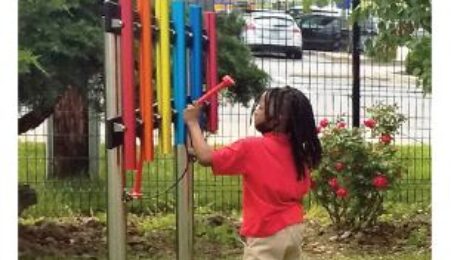
A great music program uses the whole school environment. Musical instruments in your outdoor classroom and/or playground will encourage children to learn about music through free play and exploration – subtly integrating music and ‘outdoor time’ into their everyday school experience.
Children revel in the freedom to explore the range of sounds, tempos, and dynamics of the musical instruments and free play is what gives them mastery. Children often feel less inhibited outdoors and musical playground equipment will help introduce basic musical concepts whilst being sure that the focus is on the fun. This notion of experimentation, of flexibility, of just having a go are all elements needed to become confident, rounded musicians of the future.
Music is an intensely social experience; children learn to cooperate when making music together, combining their efforts to solve problems, make decisions, and work together towards a common goal. Collaboration is needed to create a new melody or rhythm and they’re required to listen to each other as well as the sounds produced, to share each other’s ideas and express their own. Children can fine-tune their listening skills outside and develop confidence in projecting their voices across the space.
Music also has an inherently physical dynamic; movement to music is a wonderful way to get kids active, offering opportunities for both fine and gross motor activity. Outdoor environments not only offer greater freedom of movement than a classroom but also allow for less constraint to ways of behaving and thinking, making the outdoors open to richer experiences due to the increased space and the creative possibilities it presents.

Children can learn to explore their emotions through music and can learn to share these emotions with others; plus, they’ll learn they can use music to affect their emotional state. When you are feeling angry, nothing makes you feel better than playing the drums real loud, right?
The introduction of an outdoor musical space or trail as part of a school’s outdoor education program will help children discover the joy and empowerment of music-making while reaping the benefits of time in the natural environment.
Watching a class of children playing outdoor instruments prove that, when presented with the opportunity, life outdoors is still something children benefit greatly from and, more importantly, enjoy.
Written by Berliner Seilfabrik Team
With its own housing stock of around 60,000 apartments, the Berlin-based housing association HOWOGE is one of the ten largest landlords in Germany. For more than 25 years, the company has stood for sustainable inventory development, innovative housing concepts, and social engagement at various locations in Berlin. In the course of the periodic repair of the façade of a block of flats with 422 apartments in Berlin’s Hohenschönhausen district, the outdoor area was also redesigned. A varied children’s playground was created in the courtyard of the building complex. Due to the public accessibility of the farm, the play area not only benefits the immediate residents but also offers the entire living environment – including adjoining daycare centers – an exciting destination for play and movement.

“It was important to me to have a playground that caters to the needs of all ages,” said Oliver Pohlann, Landscape Architect in charge and Project Manager of Landscaping at HOWOGE. “Both the very young children and the older ones in adolescence should get their money’s worth.”

Consequently, the playground consists of play equipment with different requirements. At the heart of the toddler area is the Roo M.03 playhouse of the Spooky Rookies series, which is specifically geared to the needs of toddlers under the age of 3 for early psychomotor and social development. For example, the mud tables in the lower part of the playhouse invite you to role-play, which promotes language and social skills in a playful way. An ascent ramp makes it possible to reach the upper area of the house before descending the child-friendly slide – a form of exercise that has a positive effect on spatial perception and improved balance and coordination skills of small children.

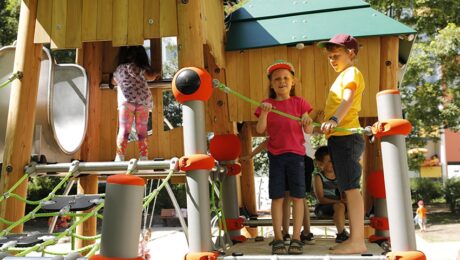
The highlight of the play area for the “big ones” is a combination of the wooden playhouses Woodville, in which two different “shacks” share a common post. The larger of the two shacks is equipped with a transitional network, which is combined with an access net. The two shacks are connected through a balcony that can be climbed via a rope ladder or using the rocking-plate ascent. “The promotion possibilities are deliberately chosen so that they offer different levels of difficulty and also offer an exciting challenge for older children,” says Pohlann. “Even when choosing colors, it was important to me that the ropes, balls, clamps and roofs look as interesting and appealing as possible. At the same time, of course, the play equipment should fit in color with the new façade design of the adjoining apartment blocks.”

Responsible for the development of Woodville at the Berliner Seilfabrik is Katharina Hilger, engineer of the Berlin Creative Center: “My personal highlight of the Woodville playground equipment is the constructive and elegant wood protection. Both from above and from below, the wood is protected by other materials. The elevation is part of the design and the round logs do not end in the usual metal post shoes.

In addition, I am pleased about the hybrid character of individual components. This means that the parts that are subject to heavy loads when playing do not connect directly to the wood, but to stainless steel pipes, which are much more stable and resistant – and thus contribute to the longevity of playground equipment.

Rounding out the playground are two play points of the Berlin product group URBAN DESIGN. The double swing Swingo.2.4 allows two children to swing at the same time and was set for Pohlann from the beginning: “Rocking is important for a playground, it always works!”

In addition to its stylish organic design, the rocker abacus impresses with three sliding weight balls. Depending on the weight ratio of the users, these can be shifted so that people of different weights can be balanced and swung together. At the same time, the play point illustrates essential physical relationships in terms of gravity and balance. Here the children have the opportunity to get in contact with the scientific laws in a playful way.

“Not only the tenants of the adjoining apartments and the surrounding kindergartens are more than satisfied with the redesign of the playground, but also incidentally passing bypassers are now more often in the courtyard on the Dierhagener road,” says Oliver Pohlann. HOWOGE has thus lived up to its motto “more than usual”.
This is a project reference of Berliner Seilfabrik, in Germany. If you would like to create a relevant custom-made solution in Greece or Cyprus, please do not hesitate to contact with us at info@eliteareas.gr
